
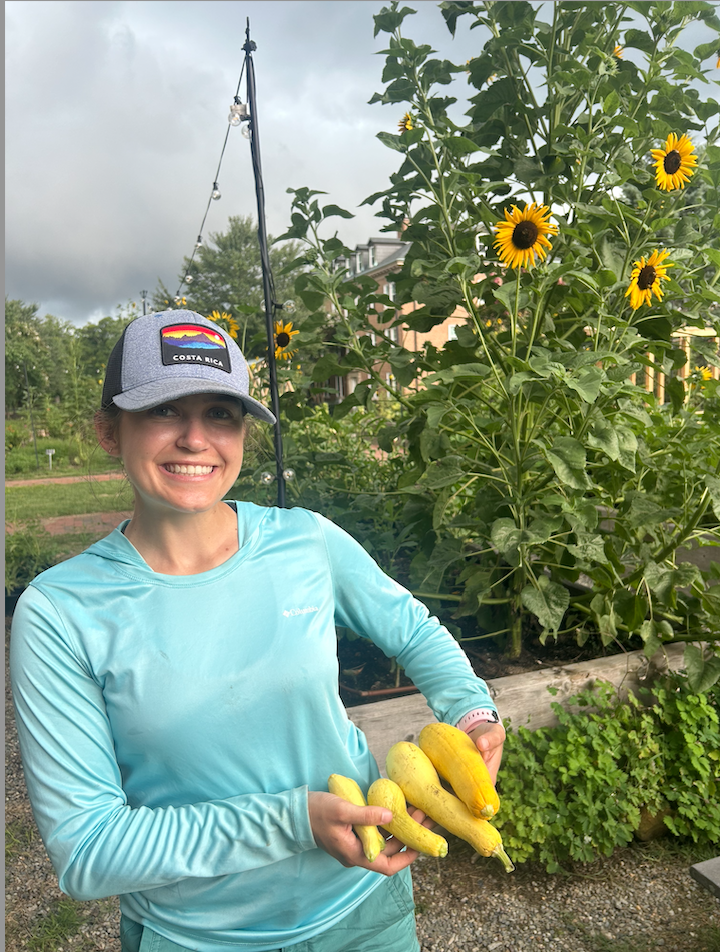
Meet Bella King, one of this year’s 13 Bill Emerson National Hunger Fellows. The Food Club Network has the privilege of hosting her for six months through a Congressional Hunger Center program that focuses on community-based solutions to hunger. In her own words, here are her impressions thus far:
I grew up in rural Person County, North Carolina, and earned my bachelor’s degree in Environmental Science from UNC-Chapel Hill. My commitment to food justice grew from the intersection of several influences, including personal experiences navigating food insecurity and lack of access to nutritious foods, my lifelong love of cooking, and a desire to use the unique opportunities afforded to me to advocate for meaningful social change. All of my experience thus far has centered on charitable farming and land-based education, so I pursued this fellowship to develop a more comprehensive perspective on hunger relief, particularly as it comes to the operational side of food access programs.
Q: What have the first several weeks been like?
A: At the start of this fellowship, I thought I had a decent scope of possible community-based hunger interventions. Between my degree, hundreds of hours spent volunteering in a food pantry, and two years of work in a donation-based garden, this assumption wasn’t unreasonable. Yet, when I walked into the Community Food Club of Grand Rapids for the first time, my mind was blown.
The food club model is revolutionary. It stands out because it isn’t a band-aid, it’s a solution. And a well-rounded solution, at that… not only does the model reduce hunger, but it improves public health outcomes by making nutritious food more accessible, and it’s fantastic for the environment, redirecting millions of pounds of food from landfills each year.
The normalcy of the process places value on members’ opinions and allows them to shop freely, choosing whatever they’d like. And the kindness of staff and volunteers creates an environment that members genuinely feel excited to be a part of.
Seeing the impact of the food clubs first hand has reignited my passion for community-organizing and gives me hope for a future without hunger.
Q; What are you working on for the Community Food Club?
A: My specific job as a fellow is to create a collective dashboard and database for the Food Club Network that provides a fact-based understanding of the impact of the food club model. Sorting through and standardizing the data has been challenging, but it’s simultaneously so rewarding to see our collective impact coming together. It’s also been so inspiring to think about how we could use the findings to promote our model and to grow the network to reach even more Michiganders.
Q: What are you hoping to learn?
A: For the last month, I’ve been working diligently to soak in everything I can, especially the steps it takes to build and successfully maintain a food club. From working checkout shifts, to sorting food, managing volunteers, and doing donor outreach, every moment and experience contributes to the bank of knowledge that I will carry with me into my career.
There isn’t a single, blanket solution to any social problem, and I look forward to continuing to develop my understanding of how this model fits into the bigger picture of ending poverty in the United States. I’m also looking forward to growing my data processing skills through my project, building a working knowledge of Michigan’s In Lieu of Services policies for Medicare through seminars and convenings and, overall, just getting to know and helping the members, staff and volunteers, as they all have so much to teach and share.